

Choose an insulated lunch setup by matching the food, journey and school routine to something your child can carry, open, eat from and bring home again.
An “insulated lunch box” might mean a structured box, a thermal lunch bag used with a box, or an insulated food flask. They solve different problems. Start with the meal and the time before eating, then check capacity, compartments, leak resistance, fit, cleaning and independent use.

First decide which lunch setup fits your child
A structured or compartmented lunch box is best for a mixed packed lunch: sandwiches, fruit, vegetables and snacks that you want separated. Compartments organise food, but they do not automatically provide meaningful insulation. If the lunch needs to stay chilled, place the box in a suitable thermal carrier with a cool pack, following current food-safety advice.
A thermal lunch bag is an insulated outer layer rather than a replacement for a lunch box. It is useful when your child needs a box, drink, snacks and an ice pack together. For example, the Citron Thermal Classic Lunch Bag - Vehicles has a BPA-free, food-safe thermal lining, an interior pocket and an easy-carry handle. Its stated capacity includes a lunch box, a 350ml water bottle, two reusable sandwich bags and a complete cutlery set.
An insulated food flask is more focused: it suits one warm or chilled dish such as pasta, soup or porridge. It can be simpler than trying to keep every section of a bento lunch at the right temperature. Choose a combination when your child needs separated cold foods plus one warm or chilled main.


Match insulation to the meal and the school day
Think about the interval between packing and eating, whether the school has a fridge, and whether the food is cold, room-temperature or warm. Insulation can help food stay fresher for longer, but it is not a guarantee of a safe temperature for a fixed number of hours. Use the Food Standards Agency guidance on keeping food safe in your fridge alongside your school’s own guidance.
For a chilled lunch, chill the food before packing and use an appropriate cool pack inside the thermal layer. For a warm lunch, use a correctly sized vacuum-insulated flask according to its instructions. Avoid assuming that putting a hot dish into a compartmented box, or placing any lunch box in a thermal bag, makes it suitable for all-day storage.
Also consider access to refrigeration. A nursery child eating soon after arrival may need a simpler setup than a primary-school child whose lunch will sit in a school bag until midday. The right choice changes with the routine, not just the child’s age.


Choose capacity from real portions, not future hopes
Pack the amount your child usually eats, with a little flexibility for growth, rather than filling every available space. An oversized lunch box can become heavy, encourage overpacking and leave food untouched; a tiny one may squash food or require extra containers.
Measure a favourite lunch at home and compare it with the product’s internal dimensions or stated capacity. The Citron Rectangle Lunch Box - Vehicles has a stated 970ml capacity and can hold one or two insulated 250ml food jars, which may suit a larger appetite or a breakfast-and-lunch routine. A smaller child may be better served by fewer, well-used compartments rather than unused volume.
Remember the whole load: lunch box, thermal bag, drink, cool pack and cutlery. Your child should be able to lift it into a school bag without it becoming awkward or too heavy.


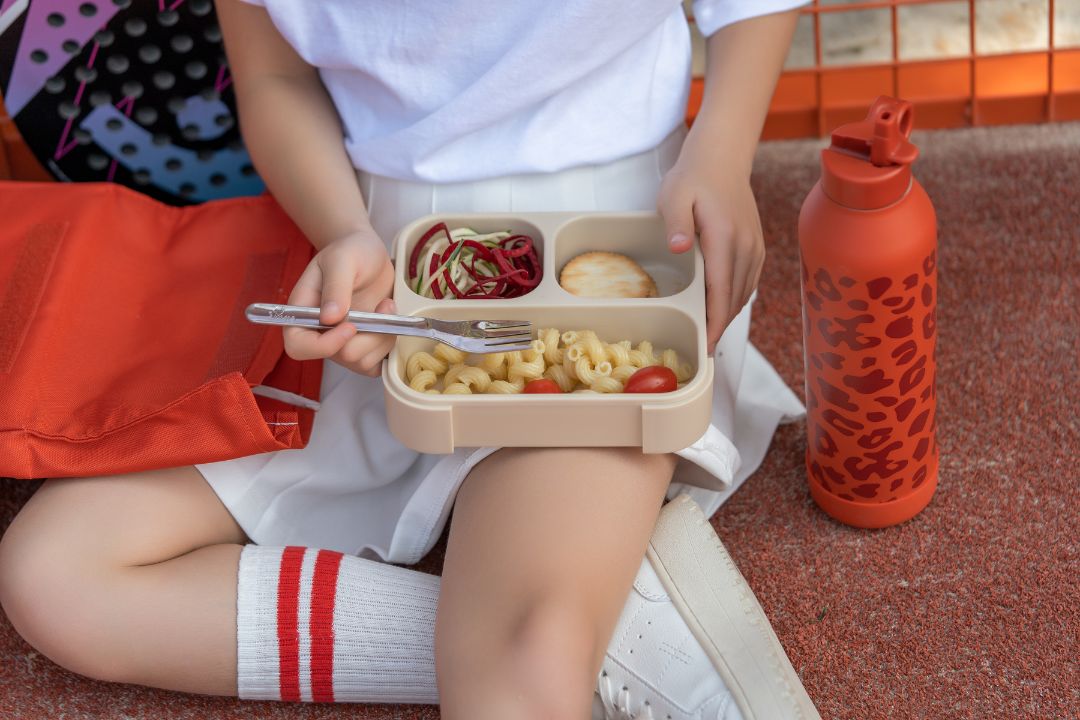
Use compartments to support the way your child eats
Compartments can make a packed lunch feel manageable for a selective eater: familiar foods stay separate, portions are visible and fruit does not touch a sandwich. They are also helpful when a child likes to graze rather than eat one large item. But more compartments are not automatically better. Check that each section is large enough for the foods you actually pack.
The Citron Tritan Lunch Box - Spaceship has four compartments and a separate sauce container. Its stated leakproof, easy-open format is designed for children aged 18 months and up, while its food-grade Tritan construction is described as shatter-proof and resistant to retaining smells or stains.
Fixed compartments are quick to pack but less adaptable. Removable dividers or separate sealed pots can be more flexible when portions change, or when yoghurt, dips and juicy fruit need their own secure container. Treat a compartment as an organiser, not as a sealed pot, unless the product specifically says otherwise.


Prioritise independent opening and carrying
A lunch box that an adult can open easily may still be frustrating for a child. Test the latch, zip, clips or screw lid using the same grip your child will use at school. They should be able to open it without sharp force, and close it securely without pinching fingers or leaving the seal half-fitted.
Look for a stable base, a handle that suits small hands and a shape that can be lifted from a crowded school bag. For a flask, a wide opening makes scooping easier; for a box, a clear layout can help a child remember where each food is. Practise the full routine at home: open, eat, reseal, pack away and carry.
A child-friendly closure is useful only if the child can operate it consistently. If they still need help, choose the simplest reliable format and tell nursery or school staff what assistance may be needed.


Check leak resistance for the foods you actually pack
“Leakproof” is only meaningful when it matches the product’s stated design and the way it is packed. Yoghurt, hummus, sauces, ripe berries and melon need particular care because a small gap can make the whole school bag messy. Check whether the seal covers the whole box, whether sauces have a separate pot and whether silicone parts can be removed for cleaning.
The Citron Grand Lunch Box - Mermaid is described as having four mix-free compartments, a 100% leakproof seal, a child-friendly latch and a removable silicone lining. It also includes a 250ml vacuum-insulated food jar, making it an example of a combined setup for separated foods plus one warm or chilled dish.
Before the first school day, place the closed box on its side in the sink or over a tea towel with water inside, then inspect the seal and corners. This is a practical home check, not a substitute for following the product’s instructions or using separate sealed containers for very wet foods.


Make sure the whole system fits the school bag
Measure the lunch compartment of the intended school bag before buying. Check the box’s length, width and height with the lid closed, then add room for a drink, cool pack, cutlery and any spare snack. A box that fits on the kitchen worktop may still be awkward once a child’s jumper, reading book and water bottle are packed.
A thermal carrier can make the system easier to organise, especially when it has an interior pocket for a cool pack or cutlery. Keep the lunch bag easy to identify, light enough to carry and simple to wipe after a spill. If the lunch travels separately from the main school bag, an easy-carry handle becomes more important.
Do a trial pack at home. Ask your child to lift the complete setup, place it in the bag, remove it and return everything after opening. This reveals practical problems that product dimensions alone will not show.

Check materials, seals and the cleaning routine
Look beyond a “BPA-free” label and read the full product information. Check the material description, food-contact claims, seal construction, liner and care instructions. A reusable lunch box is only a practical low-waste choice if its parts can be washed properly and remain usable through everyday wear.
Ask whether the lid seal or silicone lining is removable, whether the box is dishwasher suitable and whether the thermal lining can be wiped rather than soaked. Dry every part fully before closing it to reduce lingering smells. Products such as the Tritan Lunch Box are described as resisting smells and stains, while the Grand Lunch Box has a removable silicone lining; still follow the care instructions for the exact product.
Inspect seals regularly for crumbs, stretching or damage. Replace a product if a closure no longer works reliably, and do not use a cracked box or damaged food-contact component.


Pack with care, then test the routine before term starts
Use a simple packing order that suits the lunch: place the main food securely, add wet foods in their sealed pot where needed, then check the cool pack, cutlery and lid before closing the thermal layer. Avoid overfilling, and make sure every removable seal is seated correctly.
In the final week before back to school, let your child practise the complete routine with the lunch they are likely to take. Watch for small obstacles—such as a stiff closure, awkward cutlery or a lid that is difficult to replace—and adjust the setup while there is still time.

Final checks before the first school day
Before buying, make three final checks: confirm the product dimensions against the school bag, verify that its stated capacity suits a familiar packed lunch, and read the seal and care instructions for the foods you plan to send.
Then choose the format that best matches the routine: a compartmented box for separated foods, a thermal bag when the lunch needs an insulated outer layer, or a food flask for one warm or chilled dish.
The right insulated lunch setup is the one your child can use confidently and that suits the meal, journey and school routine. Choose the format first, then check the practical details before placing an order.
Frequently asked questions
Can a child use the same lunch box as they grow? They can if the layout still fits their portions and the complete setup remains comfortable to carry. Reassess capacity and weight when their appetite or school routine changes.
Is a thermal lunch bag enough on its own? It provides an insulated outer layer, but most mixed lunches still need a box or sealed containers to separate and protect the food.
Should wet foods always go in a separate pot? Not always. Use the lunch box’s stated design as your guide, and choose a separate sealed pot when a section is not intended to contain yoghurt, dips or sauces.
What should I do if the product’s care instructions are unclear? Check the manufacturer’s guidance before buying. A reusable lunch setup needs seals, liners and food-contact parts that you can clean and dry properly.