

Choosing the right water bottle capacity for school days and busy days out can save you from soggy bags, a parched child, and last-minute detours to buy drinks. But with varying schedules, limited refill points, and different activity levels, how do you pick a size that actually fits your day?
In this guide, we'll walk you through mapping your day and where refill points are, calculating realistic water needs for your child, and balancing bottle capacity with portability, insulation, and ease of use. These practical steps will help your child stay hydrated, support concentration and energy levels, and cut down how often you need to top up during the day or cope with a forgotten bottle.

Plan your family's day to ensure easy access to drinks
Map your child’s day into chunks and note every place they can top up their drink, such as classroom water fountains, canteen queues, and after-school clubs. That shows where refills are realistic and where you need to carry enough water for the whole chunk. Measure a typical sip by pouring your child’s usual drink into a measuring jug, taking a few sips and counting them, then multiply by the number of chunks between refills to estimate the minimum bottle capacity. Add a safety margin for hotter days, extra activity, or stronger drinks so the bottle meets real demand rather than an idealised expectation.
Check carryability and storage. Make sure the bottle fits your rucksack, lunchbox, and car cup holders, and that your child can lift and open it easily so they keep sipping. Plan for real-world losses like spills and sharing by allowing extra capacity or packing a lightweight spare or a collapsible bottle. Try a trial day: pack what you expect to need, then watch how much your child actually drinks and how they handle the bottle. Use those observations to tweak the bottle size or refill points until you find a practical balance between hydration needs and usability.
Pick a leakproof, easy-to-carry bottle for longer days.
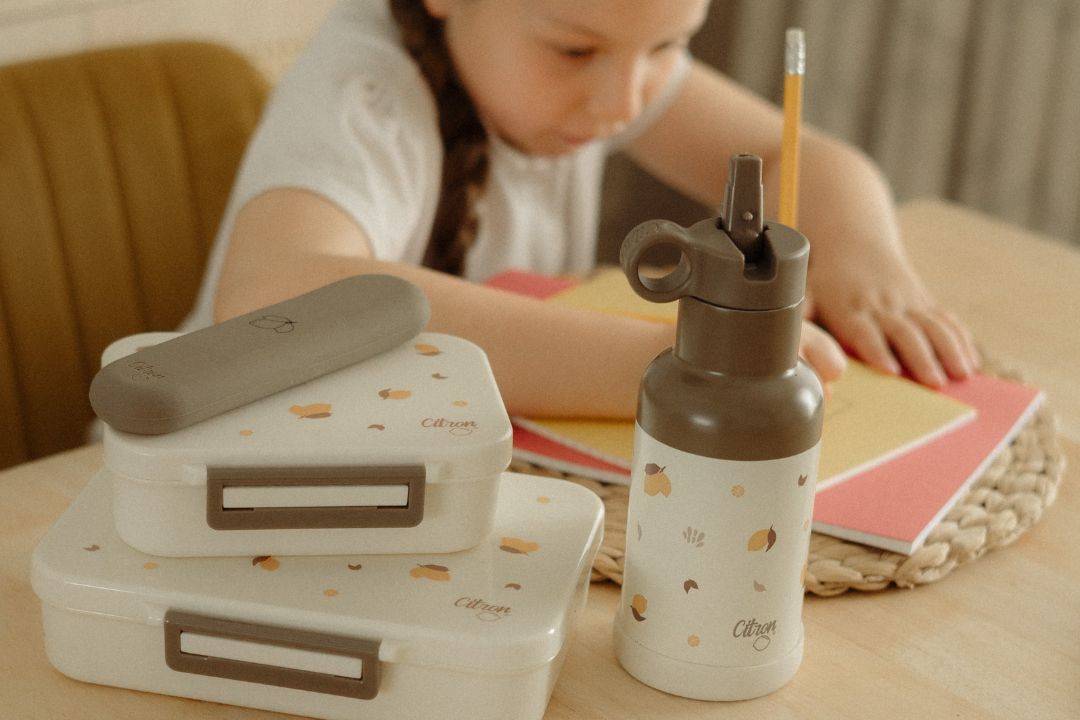
How to work out your child's daily water needs
Try this simple approach over a few typical days: measure every drink your child has and note the volumes. From those records calculate two figures: the average daily total, and the largest single-day total. Use the average to choose a bottle size for regular school days, and use the largest day to size a bottle for more active outings. To check capacity quickly, set a daily fluid target, subtract the drinks your child will have at breakfast and lunch, and pick a bottle that equals the remaining amount. Test the arrangement for one day and tweak the size if needed. This gives you concrete numbers to work from, rather than guessing volumes.
Tweak your usual water allowance for active days and warm weather by adding about 20 to 40 per cent. For example, if your child normally takes 500 ml, aim for roughly 600 to 700 ml on days with PE or long playtimes. Note where and when your child can refill, such as a classroom tap, school fountain, or sports centre, so you can decide whether one bottle will do. Match the bottle to the day: a mid-size bottle works well for standard school days, while trips and sports often call for a larger bottle or a second one. Think about weight and rucksack fit too — two smaller bottles can be easier to carry than one heavy one. Planning this way keeps bags lighter while making sure water is available when refills are scarce.
Pick a 750ml insulated bottle for busy, active days.

Balance capacity, portability, thermal performance, and usability
Work out fluid needs by counting likely drinking opportunities during a typical day, then match bottle size to that number. Think about a school day—breakfast, morning play, lunch, after-school time, and any sports sessions—and note when your child can reasonably refill. As a guide, many primary-school children will manage about 350 ml to 500 ml between refills, while older children and adults often need 500 ml to 1 litre. Try a quick test at home: fill the bottle you are considering and see how many refills cover a normal day. If your child is very active, such as during PE or after-school clubs, aim for the higher end of the range or allow for an extra refill.
Try a few simple checks that mimic real life before you commit to a bottle. Carry a filled bottle in your usual bag, slot it next to your child’s lunchbox and any other kit you take out, and walk around for a few minutes to judge how it sits and feels. Weighing the filled bottle helps you compare the load it adds to your day. Balance insulation with capacity. Vacuum insulation keeps drinks hot or cold for longer, but the thicker walls often reduce internal volume for the same external size. If you need more usable fluid, consider two smaller bottles, a collapsible spare, or a single bottle with clear graduated markings so you know exactly how much you have. Check ease of use and hygiene. Test the drinking flow and how easily you can clean the bottle at the sink. Wide mouths make it simple to add ice or scrub the interior, removable seals stop grime hiding in crevices, and clear graduations help when measuring drinks. For shared or school settings, label bottles with names or coloured bands to avoid mix-ups.
Building on those real-life checks, map out a realistic day: journey to school, playtime, lessons, and any after-school activities, and note how long your child will be without a refill. Balance capacity, carryability, thermal performance, and simplicity of operation so the bottle keeps your child hydrated without adding unnecessary weight. To estimate sip volume, fill a container with a known amount, let your child take their usual sips until it is empty, and divide total volume by the number of sips to get an average sip size. Use that figure to pick a bottle with enough capacity and easy refill access, then try it for a day to see whether it meets actual use.
To summarise, use three practical steps: map the day, calculate needs, and balance features. Map the day: note each outing's length and activity level, for example, a normal school day, an after-school club, or a weekend day trip. This shows when a standard mid-size bottle will do and when you might need more. Calculate needs: estimate how much your child usually drinks for each outing, then add a 20 to 40 per cent buffer for sports or warm conditions. So if you expect around 500ml, plan for an extra 100 to 200ml to be safe. Balance features: compare bottle capacity, temperature retention, and operability to decide whether a mid-size bottle, a larger bottle, or a spare suits each situation. If you cannot top up during the day, carry a collapsible spare or a labelled second bottle so your child can drink confidently throughout the day.