

Ever come home to a thirsty child, or a damp school bag from a leaky water bottle? Small choices about capacity, material, lid type, and insulation affect how often you need to refill, clean, and carry a bottle.
Below, you'll find headings that explain how to gauge hydration needs by age and activity; match bottle capacity to the length of an outing and your child's appetite; choose safe, sustainable materials; pick lids and features that suit everyday use; and make cleaning, carrying, and school storage effortless. Read on for practical, evidence-based tips to help you choose a water bottle your child will actually use, whether for school or days out.

How to gauge your child's hydration needs by age and activity
A simple rule of thumb is to multiply body mass in kilogrammes by 30 to 40 millilitres to estimate daily fluid need, then match that total to common bottle sizes. For example, a small child of 15 kilogrammes needs about 450 to 600 millilitres, so a single 500 ml bottle will usually cover a school day. A primary-schooler of 25 kilogrammes needs about 750 to 1,000 millilitres, so a 750 ml to 1 litre bottle fits well. A teenager of 60 kilogrammes may need roughly 1.8 to 2.4 litres, which calls for a larger bottle or two smaller ones. Treat these figures as starting points, and compare them with actual intake over a typical school week to adjust bottle size, and top-up habits accordingly.
Children's fluid needs rise with activity and heat. As a rule of thumb, add roughly 250 to 500 ml for a PE lesson, plan for 500 ml or more on a long walk, and increase the amount further on hot days, since sweat rate depends on clothing, intensity, and temperature. Match bottle capacity to bag and lunchbox space, and choose a bottle your child can open and drink from independently. Clear measurement markings make it easy to see how much they drink; trialling different sizes over a normal school week will show what works best for your family. Teach simple monitoring cues: check urine colour and frequency, and watch for persistent thirst, dry lips, or low energy. Encourage regular sipping throughout the day rather than infrequent, large gulps. Using an insulated bottle helps keep water cool and more appealing. Seek personalised clinical advice for infants, for children with medical conditions, or for prolonged, heavy exercise when electrolyte guidance may be needed.
750 ml fits school needs; insulated to keep water cool.


Choose the right bottle size for your child's age, appetite, and outing length
Use these practical starting points for water-bottle capacity: small children 250 to 350 millilitres, younger schoolchildren 350 to 500 millilitres, older children 500 to 750 millilitres, and teens 750 to 1,000 millilitres. These ranges reflect the typical number of short breaks, expected physical activity, and whether refilling is available, so choose a larger bottle for sports days or outings without easy top-up points. Increase capacity for children who drink more at mealtimes or who tend to eat less overall, because thirst and food intake often substitute for each other.
Bottle shape and mouth size change how children drink. Wide-mouth bottles make it easier to add ice, pour quickly, and clean, while narrow necks or straw designs slow the flow and reduce spills for younger users. Match the bottle to your child’s drinking style during short breaks. Weight matters, too: every 100 millilitres adds roughly 100 grams to a filled bottle. Try filling the bottle you’re considering and carry it in your child’s bag, or hold it for a minute, to check comfort. Also test straps, clips, and whether the full bottle fits neatly in the lunchbox. Insulated bottles keep water or milk cooler for longer, which helps on active days or when you want to keep milk fresher, but they add weight and bulk, so favour non-insulated models when lightness and simplicity matter. Look for refillable bottles with clear volume markings and lids that come apart for easy cleaning, and favour materials and designs that minimise trapped moisture and mould. Keep a simple cleaning routine: rinse or wash daily, and disassemble for a deeper clean weekly to preserve taste and reduce bacterial build-up.
350ml suits younger schoolchildren; insulated straw and wide opening


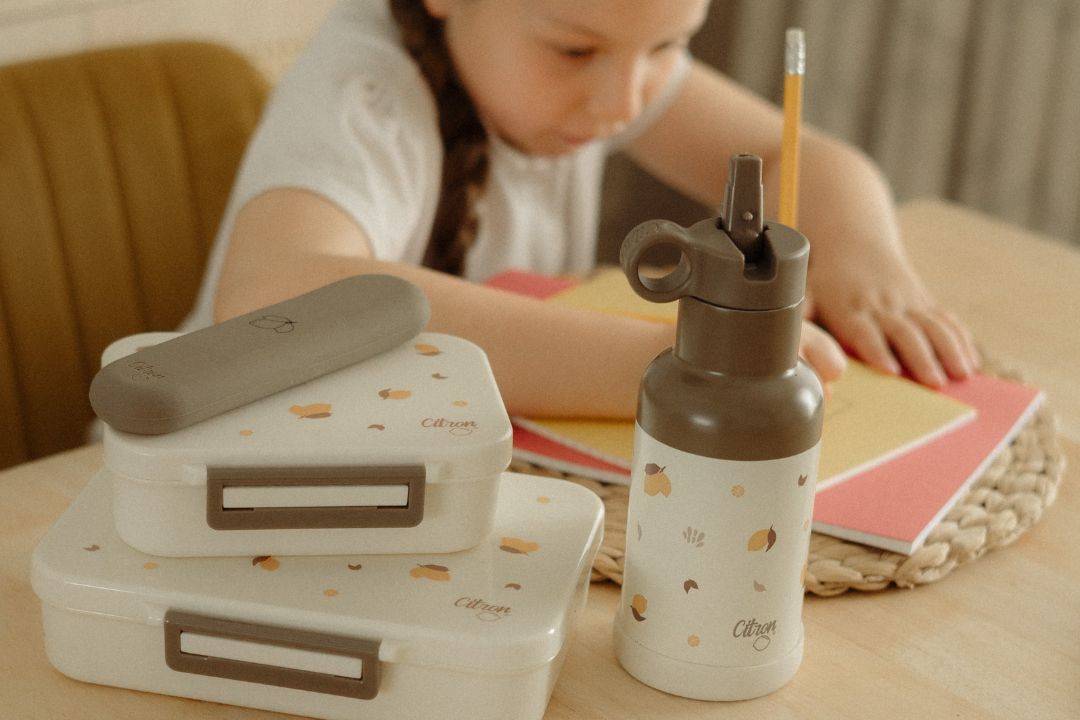
How to choose safe, sustainable materials and effective insulation for lunchboxes
For lunchboxes and bottles, material makes a practical difference. Food-grade 18/8 stainless steel resists odour, stands up to knocks, and is widely recyclable, so it is a good choice when you want something that will last. Glass is chemically inert, so it keeps flavours pure, but it adds weight and a risk of breakage. BPA-free, low-odour plastics give you lightness for schoolbags, and silicone adds collapsibility when packability matters. For temperature control, double-wall vacuum insulation creates an airless gap that greatly slows heat transfer, so it preserves hot or cold far better than single-wall bottles. Match insulation to the use: choose vacuum-insulated bottles for full days out, and single-wall bottles when you need something lighter for school or short trips where faster cooling is acceptable.
When choosing family bottles, pick lids with simple, removable seals you can take apart for thorough cleaning; removable seals make it easier to reach hidden crevices where residue and mould can hide. Opt for wide-mouth openings if you want to add ice or have space to scrub the interior. Fill and invert a bottle to check for leaks, and inspect any spout or straw for small gaps that trap liquid. Replace worn seals promptly to help avoid lingering smells and contamination. Look for clear food-safety markings and dishwasher-safe labelling for individual parts, and check that spare components are available. Finally, favour bottles designed to be repaired, recycled, or repurposed so they retain material value instead of being discarded after a minor fault.
Choosing, cleaning and retiring a reusable bottle
- Pre-purchase quick-check: pick the right material for your priorities, for example food-grade 18/8 stainless steel for durability and low odour, glass for flavour purity, lightweight BPA-free plastics for low weight, or silicone for collapsibility; match insulation to use, favour vacuum-insulated for full days out and single-wall for lightweight, school-friendly use; prefer lids with simple removable seals and wide mouths, invert a filled bottle to test for leaks, test spouts and straws for hidden crevices, and check for dishwasher-safe labelling and spare-part availability.
- Cleaning and maintenance routine: rinse after every use and wash with warm soapy water and a bottle brush, disassemble lids and seals regularly to reach hidden grooves, perform a weekly deep clean with a bicarbonate of soda paste or a dilute white vinegar soak, air-dry bottles upside down, and replace seals when they crack or retain odour to prevent contamination.
- Sustainability, repair and end-of-life actions: favour bottles designed for repair and with available spare parts, keep seals and lids as replacements, repair simple faults such as loose threads and replace damaged seals rather than discarding, repurpose intact bottles as storage or planters if you stop using them for drinks, and recycle materials separately through local metal or glass schemes or manufacturer take-back programmes to retain material value.

Lids and features suited to everyday family use
When choosing a drinking bottle, think about the drinking mechanism and mouth diameter so they suit your child’s age and activity. Straws reduce spill risk, but they can trap moisture and need more thorough cleaning. Sports spouts let kids sip one-handed while they play. Flip-top or wide screw caps affect how quickly a child drinks and whether you can fit ice or a cleaning brush. Pick lids that fully disassemble, include removable silicone valves, and are dishwasher-safe or sterilizable, because small crevices and straws can harbour bacteria. Finally, a carry handle or loop for clipping to a rucksack, and a slim profile that fits cup holders, make the bottle easier to use every day.
Test leakproofing and lock mechanisms at home before you commit. Fill the bottle, tip it over a towel, and check for any drips. Favour lids with a secure seal plus a secondary lock or push-button to stop accidental openings in a school bag. Think about whether insulation matters: vacuum-insulated bottles keep drinks cold and prevent condensation that can damage books and papers, while single-wall bottles are lighter and will sweat in warm weather. Bear in mind insulation adds weight, and thicker walls may not sit comfortably in a younger child’s rucksack pocket. Match the lid’s flow control to the child so younger pupils cannot gulp, while older ones can sip quickly between lessons.
Leakproof, insulated bottle with flip-up straw and wide opening.


Effortless cleaning, carrying, and school storage for busy families
To make cleaning, carrying, and school storage effortless, start by choosing a bottle size that matches your child's age and activity. For small children aim for 250 to 500 ml, older children 500 to 750 ml, and for sports or long days 750 to 1,000 ml, which balances how much they can carry with how often you will need to refill. To check the fit at home, fill the bottle, pop it into the school bag, and ask your child to carry the bag for a short walk; if it pulls to one side or bounces, try a lighter or narrower shape. Look for slim, low-profile bottles that sit neatly in side pockets and lockers, and check that handles, loops, or straps do not snag on zips or bag fittings. Practise opening and closing the lid one-handed with your child so they can drink between lessons without fumbling.
Think about how materials affect cleaning and temperature. Stainless steel resists odour and keeps drinks cooler. Some hard plastics can stain and hold smells. Silicone gives flexibility and collapsible options, but it can trap moisture. Disassemble seals, valves, lids, and any removable parts before cleaning. Use a bottle brush for wide mouths, and run dishwasher-safe pieces on the top rack. For stubborn smells, soak parts in warm water with bicarbonate of soda, then rinse. Leave lids and caps off to air-dry and inspect each piece for residue. Label the bottle with your child’s name and class, and tuck a small spare bottle into your bag for long days. Use a dedicated mesh pocket or a waterproof pouch to protect books and lunches. Make a short routine: rinse, wash or disassemble, then air-dry. A simple, regular habit reduces odour and mould build-up and keeps bottles ready for the week ahead.
Match a bottle's capacity, material, lid design, and insulation to your child's age, activity level, and school routine to cut down on leaks, refills, and odour. As a rule of thumb, younger children or short trips often need about 350 to 500 ml, while older children or sports sessions may need 500 to 750 ml. Try before you commit: fill a bottle, carry it in a packed bag, and practise one-handed opening to check comfort, spillproofing, and how easy it is to clean.
Check the earlier sections on hydration by age, capacity for outings, materials and insulation, and lids and cleaning, and pick the features that suit your child’s daily school routine. For one normal school week, note how much they drink during school hours; that pattern will show whether you need a larger bottle or regular top-ups. Label and wash all parts each day so the bottle becomes a dependable part of the routine, not something forgotten at the bottom of a bag.