

A good packed lunch manages where moisture goes. Give wet foods their own sealed space, keep dry foods away from direct contact, and add sauces or dressings as close to eating time as practical. This simple contain, buffer, finish method helps reduce soggy bread, soft crackers, muddled textures and leaks for school, work, picnics and days out.

Start by sorting food by moisture
Wet foods — yoghurt, dips, hummus, chutney, dressings, juicy tomatoes and fruit that releases liquid.
Dry foods — bread, wraps, crackers, cereal, granola and crisp snacks that lose texture when damp.
Delicate foods — chopped berries, soft fruit, leafy salad and anything easily bruised or crushed.
Sauce-based foods — pasta salad, couscous, noodles or vegetables that are best finished with dressing just before eating.


Build each lunch with contain, buffer, finish
Before choosing a container, look at the meal as a set of contact points: which ingredient is wet, which needs to stay dry, and which can be added at lunchtime? That quick check will show whether a compartment, barrier, sauce pot or food jar is the most useful next step.


Pack sandwiches around the juicy fillings
Cucumber, tomato, apple, pear and juicy fruit can make bread soft when they sit against it for hours. For a fresher sandwich, pat sliced produce dry, keep it in its own compartment, or place a barrier between it and the bread. Cheese, lettuce or a thin spread can sometimes act as a buffer, but they are not a guarantee if the filling is very wet.
A simple option is a sandwich in one space with cucumber or tomatoes beside it, rather than inside it. Children can add the slices at lunchtime if they enjoy assembling their own food. If the filling must go inside the sandwich, pack it shortly before leaving and avoid overfilling, which can press moisture into the bread.


Give yoghurt, dips and dressings their own space
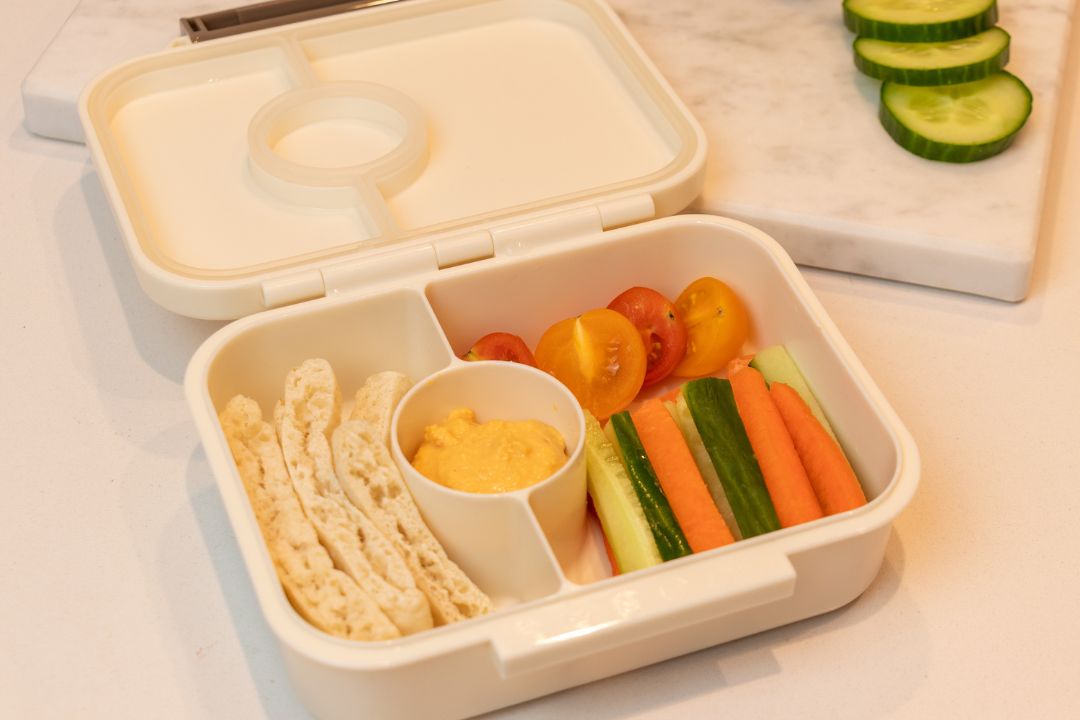
Yoghurt, hummus, salsa, chutney and salad dressing should not share an open compartment with crackers, bread or cereal. Use a sealed sauce pot, a small reusable pouch, or a dedicated leak-resistant container. For yoghurt with granola, pack the yoghurt separately and add granola just before eating if possible.
A separate pot is also useful for a dip that children can spoon or dunk into. Fill it without overfilling, wipe the rim, and check the lid is properly closed before it goes into the lunch bag. A sealed container controls leaks; it cannot stop a crisp food becoming soft if the two foods are opened and mixed long before lunch.


Keep chopped fruit and vegetables from spreading moisture
Wash produce ahead of time, then dry it well before packing. Whole fruit is often the lowest-effort choice when you are short on time, while chopped fruit and vegetables need more care because cut surfaces release juice. Keep them in their own compartment or small container, and avoid placing crackers or bread directly underneath.
For berries or cucumber, a little space around the pieces can help rather than pressing them into a full compartment. If a fruit is particularly juicy, such as orange segments or melon, use a sealed pot or pack it separately from dry snacks. A food jar can also keep a moist side contained when it suits the meal.

Choose the right container for the layer
Use the lunchbox you already have first: make one area the wet zone, one the dry zone, and keep delicate foods away from anything likely to leak. If there is only one large compartment, use reusable tubs, sandwich bags or small lidded pots to create separate layers inside it. A clean, dry tea towel or napkin can provide a temporary buffer around a wrapped sandwich, but it is not a substitute for a sealed container when food is runny.
Compartments make the routine easier because the barrier is built in. Citron’s Tritan Lunch Box - Olive Green has four compartments and a separate sauce container, while the Grand Lunch Box - Spaceship combines four mix-free compartments with a separate sauce pot and a 250ml vacuum-insulated food jar. Those features can simplify separation, but sensible filling and realistic expectations still matter.

Pack crisp foods last and close to eating time
Crackers, toast, cereal, granola and crispbread are best packed after wetter items, with as little time as practical before leaving. Keep them in their own compartment or wrapped separately, and do not use them as a base for juicy fruit or dressed salad. If the lunch is prepared the night before, separate containers matter even more because the foods will have longer to exchange moisture.
The same principle works for adults’ lunches and family days out: finish salad with dressing later, keep a dip closed until serving, and use a food jar for foods that are meant to be moist, such as pasta, soup or a chilled side. A leakproof seal helps protect the bag, while separation protects texture.

Make the layers easy for children to use
A good layer is one a child can understand at a glance. Give each space a job: sandwich, fruit or vegetables, crunchy snack, and dip or yoghurt. Let children choose one item for each space, then help them notice which foods need to stay separate. This turns packing into a small routine rather than a last-minute negotiation.
The Lunchbox Planner - Free Download is designed for four-compartment lunch boxes, so families can plan the same pattern across the week. Children can help choose the contents for each compartment, while adults check that wet foods are contained and crunchy foods are packed last.


Ready-to-copy layered lunch combinations
Use the same method with familiar foods. Try these combinations:
• Sandwich, cucumber sticks, crackers and hummus in a separate pot.
• Yoghurt in a sealed pot, berries in their own space, granola packed dry, and a spoon.
• Pasta or couscous in one compartment, chopped vegetables in another, and dressing or pesto separately.
• Cheese and crackers kept apart from grapes or apple slices, with the fruit dried well before packing.
• A food-jar lunch such as pasta, soup or a warm grain dish, with dry fruit or a crunchy snack in the surrounding compartments.

FAQs: quick checks for less soggy lunches
What if the lunchbox has one large compartment? Create separate zones with reusable tubs, a lidded sauce pot, a reusable pouch or a wrapped sandwich. Keep wet containers upright and leave dry foods in their own closed space.
When is a food jar the better choice? Use one for a moist meal such as soup, pasta or a warm grain dish that does not need to sit beside crunchy foods. It contains the meal while the other lunchbox spaces hold dry sides.
Can separation keep food crisp indefinitely? No. Compartments and sealed pots reduce contact and protect the bag, but moisture already inside food can still change its texture over time.
Quick check before you leave: Is every wet food contained? Are bread and crunchy snacks away from direct contact? Are lids clean and fully closed? Could anything be packed nearer to lunchtime?
Plan around the foods that need the most protection: keep wet ingredients contained, add sauces at the end, and pack crunchy items as close to leaving time as practical. With a little practice, the same routine works for school lunches, workdays and family adventures.