

Mornings often start with last-minute sandwich rescues, torn crisp packets, and one missing spoon. Could a simple, repeatable routine turn that chaos into calm while teaching your child real independence?
Here are ten practical steps, from setting clear goals and choosing easy-to-open containers to making a visual checklist and creating an organised packing station. Put these actionable tips into practice for packing, practising, and troubleshooting, and you can build a lunchbox routine your child will manage with confidence.

1. Set clear goals to encourage your child's lunchbox independence
Start with specific, observable goals you can watch for: your child can open and close containers, pack a piece of fruit, include a reusable napkin, and use cutlery correctly. Write these checkpoints down so you can track concrete progress. Split the overall aim into separate, skill-based milestones you can practise on their own. For example, fine motor tasks such as unwrapping and fastening lids; decision tasks like choosing a main and a side; and safety tasks such as checking seals and avoiding breakable containers. Treat each milestone as a focused practice item. Set the goals together. Ask which tasks your child wants to master, have them rate how confident they feel, and agree realistic targets. Note the agreed targets on a simple, visible chart and mark progress as you go. Seeing what they have achieved helps build ownership and makes practice purposeful.
Make goals measurable so you can see what’s working and what needs to change: count how many items your child packs unaided, note how often packed lunches come home uneaten, and record how many prompts are needed. Those simple numbers show whether to simplify choices or teach a different technique. Use low-stakes practice sessions at home for opening, sealing, portioning, and carrying the packed lunch, and give immediate, specific praise when they try something themselves. Reinforce progress with small, non-material rewards — for example, letting them choose one item for the next lunch — and mark improvements on a chart or fridge tally so trends become visible. Move on to the next milestone only when the new skill is consistent; that reduces frustration and helps habits stick.
Give them a lightweight bag they can open independently.

2. Choose child-friendly containers that kids can open independently
Choose closures your child can operate, such as large flip lids, simple snap locks, or containers with wide tabs rather than small twist caps, and let them practise opening and closing at home so you know they can manage unaided. Prioritise wide openings and shallow interiors so little hands can scoop or use a small spoon without spilling, and pick lids that sit flush with the rim to reduce accidental mess when scooping. Opt for lightweight, durable, easy-to-clean materials, and remove seals and compartments to check for trapped food and make washing simpler.
Also, pick containers your child can open with one hand, and look for textured grips and contrasting tabs or arrows as visual cues. These features support developing fine motor skills and make lunchtime quicker. Label lids with your child's name, the contents, or a simple colour code so they can identify food at a glance. Let your child help choose and arrange the containers to build ownership and make sure the system suits their abilities. Practise packing and unpacking at home, and simplify or replace any fiddly parts that trap food; this shows you what works and lets you refine the set-up before the lunchbox goes to school.
Choose a lightweight, easy-open four-compartment box for little hands.

3. Create simple evening and morning routines for calmer school mornings
Create a short evening checklist with a few clear actions your child can complete, for example choosing lunch items from a limited set, placing them in their lunchbox, and laying out school clothes. Keep morning instructions visual and consistent: display a simple sequence of pictures on a laminated strip or chart so your child follows the same order each day, which helps turn decisions into habit. Set up a child-height packing station by the door with clearly labelled containers, a permanent spot for the lunchbox, and easy-to-reach utensils to remove searching and reduce morning friction. Give one or two age-appropriate responsibilities, and offer a couple of controlled choices; limiting options helps children practise decision-making and feel capable without becoming overwhelmed.
Practise the whole routine together when you're relaxed. After each run-through, talk about what went well and adjust a single, small step to build your child's confidence and ease morning stress. Short, regular rehearsals help your child internalise the sequence and complete tasks more quickly. Over time, the combination of visual cues, a couple of simple choices, and a dedicated packing area turns packing into a habit your child can manage independently.
Download a simple weekly lunch plan now.

4. Create a clear visual checklist so kids can pack independently
Pair a clear photo of each item with a short label and a tick box. Photographs help pre-readers recognise items quickly, while labels build vocabulary as children pack. Colour-code sections and add simple icons for main, snack, drink, and extras so the balance is obvious at a glance and decision fatigue falls away. Laminate the sheet or slip it into a clear sleeve so it is reusable and easy to reach, and clip it to the packing station or the lunchbox for portability and frequent use.
Place a final "ready" box and a photo of a finished lunch where you pack lunches. That visible finish cue helps children self-check and reduces forgotten items. Invite your child to co-create a simple checklist, adding family-specific reminders like allergy notes or short prep steps to increase their ownership. Keep the checklist consistent and in the packing spot so it becomes part of the flow rather than another chore. Over time, these small design choices make packing more independent for children and help parents spot any gaps quickly.
Download a printable planner to simplify lunch packing.

5. Set up an organised lunch-packing station for busy mornings
Pick a single child-height packing station with a clear surface, an obvious spot for the lunchbox, and reachable storage for containers so your child can follow the routine without extra steps. Use labelled bins or trays for mains, fruit and veg, snacks, drinks, and cutlery, and add simple pictures for younger children to speed choices and make missing items obvious at a glance. Keep the categories consistent and the layout organised; a predictable sequence helps children learn the routine through repetition.
Display a simple visual checklist at the packing station with portion suggestions, any dietary needs, and the recommended packing order. This prevents forgotten items and helps your child get used to the routine. Keep a small supply of clean, ready-to-fill containers, wipes, and a compact drying or staging area close by so packing lunch becomes one smooth task rather than several. Store some containers pre-assembled to cut steps and make busy mornings more reliable. Rotate snack options and keep a visible "use first" basket for perishable leftovers to reduce waste, lower decision fatigue, and make it obvious which items should be packed next.
Download the weekly planner to simplify packing routines.

6. Teach and practise packing skills together
Try a step-by-step walkthrough: stand with your child and show how to choose items, assemble travel-safe containers, and close lids while they copy each step and you give gentle corrections. Use simple portion rules, such as one protein, one fruit, and one vegetable, each sized to the child's hand or a lunchbox compartment, so they can make balanced choices independently. After a few repetitions, these actions become routine, build muscle memory, reduce morning decision-making, and help your child pack confidently without prompts.
Place a picture chart or photo sequence by the prep area so your child can follow images rather than instructions. That reduces cognitive load and helps them pack more independently. Practise container and closure skills in short bursts: opening and closing lunchboxes, sealing tubs, wrapping sandwiches, and undoing clasps until the motions feel automatic. Then swap roles and let your child teach you what they have learned; explaining a task strengthens memory and confidence. Run quick, playful rehearsals that include common hiccups, such as carrying the box upright to check for spills, rescuing a half-open lid, and packing wet items separately. These short, repeated drills build practical competence, and noticing or praising small wins helps turn steps into lasting habits.
Print a weekly planner to simplify their lunch packing.

7. Offer limited choices and rotate favourites to encourage variety
Offer two clear choices for each part of the lunch, for example a protein and a snack, and encourage your child to pick one from each. Fewer options reduce decision fatigue and make it more likely they will eat what you pack. Balance choices by category — include a protein, a wholegrain or starchy item, and a fruit or vegetable — to preserve variety. This simple structure keeps decisions easy while ensuring a balanced lunchbox.
Try keeping a rotating shortlist of favourites, and swap in one new item each rotation. Keep the shortlist visible with photos or a labelled chart so children learn the pattern and begin to anticipate their options. Introduce novelty alongside a trusted favourite, because research shows that small, repeated exposures help children accept new flavours more reliably than replacing an item altogether. Make choosing quick and independent by portioning options beforehand and using labelled containers or a simple photo-based choice board. A tactile, visible system encourages independence, reduces friction when packing lunchboxes, and helps children follow the routine without adult prompting.
Download a free weekly planner to simplify lunch choices
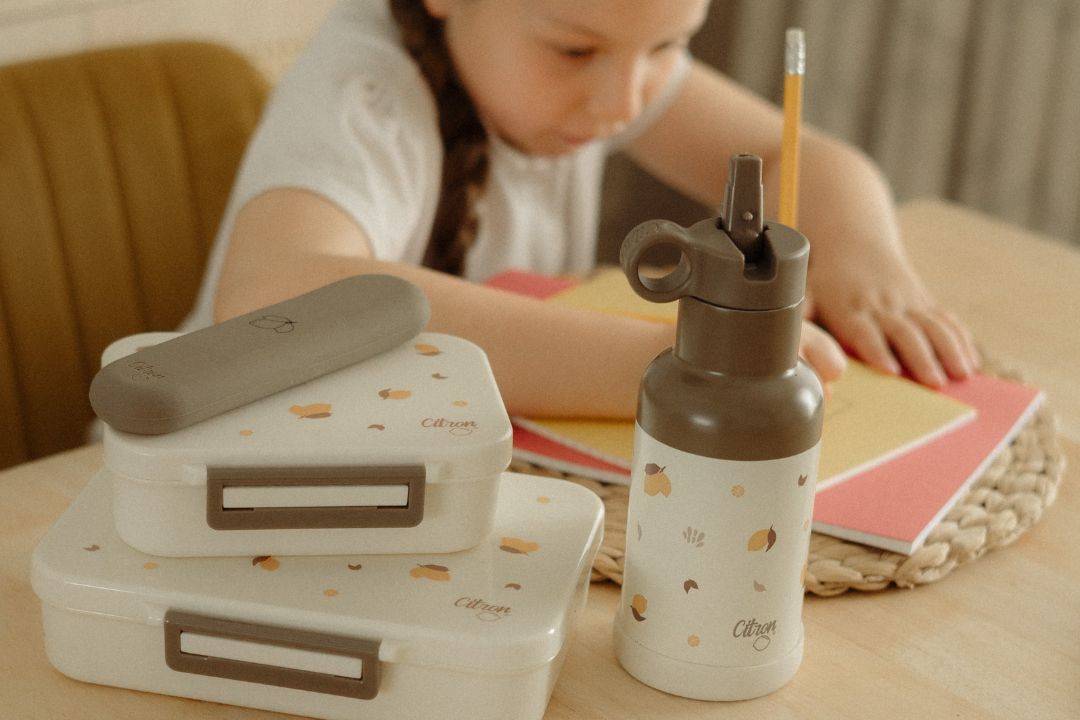
8. Plan simple, healthy ingredients and batch-cook lunch staples
Try a simple plate template: include one protein, one fibre-rich vegetable, one slow-release carbohydrate, and a portion of fruit or dairy to keep energy steady and help children stay fuller for longer. For easy variety, try combinations such as hummus with carrot sticks, a hard-boiled egg with wholegrain oatcakes, or sliced roast chicken in a wholegrain wrap. Rotating a short list of tried and trusted favourites speeds up packing and, through repeated exposure, helps children accept a wider range of foods over time.
Batch-cook versatile staples so you can mix and match components with no extra prep. Roast chickpeas, bake sweet potato cubes, cook pasta or quinoa, and slice frittata into portions, then store them in airtight containers. Portion sauces and dips into small reusable pots. Freeze ready-to-use items in single portions and defrost them the night before or in the morning to speed up packing and reduce waste. Prep ready-to-grab fruit and veg by washing, peeling, cubing, or grating in advance. Pre-grated courgette or carrot slips easily into wraps, muffins, or mini frittatas. Treat cut apple with a squeeze of lemon or a little apple juice concentrate to prevent browning. Turn dinner leftovers into lunchbox-friendly dishes: toss roast vegetables into a cold grain salad, shred chicken for wraps, or slice a savoury loaf for finger food. Vary colour, texture, and packaging to keep lunches interesting and appealing.
Pack balanced, compartmentalised lunches quickly with built-in thermal jar.

9. Troubleshoot common hiccups and adapt your plan
Quick troubleshooting checklist for packed-lunch hiccups - Forgotten item: Keep a short, reusable checklist by the front door or on the fridge and scan it as you pack. A two-second glance prevents most missing items. - Soggy sandwiches: Pack dressings and moist toppings separately in a small pot and assemble at lunchtime, or use a barrier such as a lettuce leaf or a paper towel to protect bread from wet fillings. - Leaking tubs: Choose containers with reliable seals and test lids before leaving the house. Put anything liquid in a small, screw-top pot, and place it upright in a leakproof pouch inside the bag. - Smashed fruit or banged-up snacks: Use a small rigid container or a cushioned compartment for softer items, and place hard things like yoghurt pots beneath softer items to minimise crushing. - Food getting mixed up: Segment wet and dry foods using separate pots or reusable silicone compartments so textures and appearance stay intact. - Food refusal: Turn refusals into low-stakes experiments by offering easy swaps and letting your child have a say. Swap-and-try strategy (one simple system) 1. Compile a short list of acceptable substitutions grouped by texture and flavour. For example, if they reject carrot sticks, try cucumber ribbons, roasted sweet potato cubes, or hummus for dipping. If they refuse sandwiches, try wraps, rice cakes with spread, or a pasta salad. 2. Rotate items week to week to prevent boredom and keep flavours familiar but varied. 3. Let your child pick one preferred swap each day. Giving a choice reduces pressure and turns a refusal into a tasting opportunity. Use these quick fixes to keep lunches fresh, tidy, and stress-free, while learning what your child really enjoys.
Teach your child a few simple problem-solving steps to follow when something goes wrong with their lunch. For example, follow a clear visual checklist, pick a pre-approved backup item, and pack things together when you prepare the lunch. Practise these routines together to build confidence and secure your child’s buy-in. Keep a short log noting which items come back uneaten and why to help spot patterns. Review the log with other carers, adjust portion sizes or swap in alternatives for foods that are repeatedly uneaten, and refine the lunchbox plan so it becomes more resilient.
Keep foods separated and leak-free all day.

10. Reinforce routines with praise and short, regular check-ins
Give immediate, specific praise for the exact action you want repeated. Research shows concrete, timely feedback helps children repeat behaviours and learn faster. Pair that praise with a simple visual checklist or a photo guide your child can tick each evening, and review the list weekly to spot patterns, celebrate small wins, and ease busy mornings. Anchor lunchbox packing to an existing cue, such as putting out the uniform or filling a water bottle, and begin with one tiny change to avoid overwhelm.
Try short, child-led reviews: ask your child to name one success and one small change they would like to try next. Involving them in problem solving builds ownership and supports development of executive skills such as planning and self-control. Celebrate streaks with brief, non-material treats, for example an extra choice at breakfast or a bonus play activity, to help repetition take hold. Gradually withdraw those external rewards as the routine becomes automatic, so internal motivation can sustain the habit. Keep reviews frequent but brief, and tweak the plan after each check so the routine stays manageable and responsive to your child.
Simple, repeatable steps can turn morning chaos into a teachable routine children learn quickly. Parents and carers can break packing into measurable goals: choose a snack, fill the lunchbox compartment, and add a drink. Run short practice sessions so each step becomes second nature. Use child-friendly containers with clear compartments, a visible checklist at eye level, and a child-height packing station so children can reach everything. Those small changes let children take on parts of the morning themselves, make packing quicker, and reduce stress for the whole family.
Return to headings such as containers, checklist, packing station, limited choices, and troubleshooting as practical prompts. Use them as hands-on tools to practise, tweak, and acknowledge incremental progress with your child. With steady practise and short reviews, the routine becomes reliable, eases mornings, and gives your child genuine responsibility.