

Does your child push away new foods before they try them? Often, a few small sensory tweaks to the way you present food can encourage them to taste, and sometimes enjoy, something unfamiliar.
Children often judge food by sight, texture, and size, so changing colour, contrast, shape, and mouthfeel can make new foods less overwhelming and more inviting. This post shares practical, low-effort strategies, from simple sensory tweaks to lunchbox ideas, to help fussy eaters explore new foods gently and successfully.
Support children with sensory sensitivities who struggle to try new foods
Start by familiarising your child with a new food outside mealtimes through non-eating sensory play, such as handling, smelling, sorting, or yoghurt painting. These calm, exploratory activities help reduce neophobia, the natural hesitation children show towards unfamiliar foods, and make new textures and aromas feel less threatening. Manage aroma and flavour intensity by serving items slightly cooler, offering components separately, and providing mild dips so your child can combine flavours at their own pace. Smells often put children off more than taste, so letting them control how flavours mix can make sampling easier. Present foods attractively to invite tasting: use child-sized cutlery, plain, contrasting plates, small one-bite portions, and consistent shapes. Little changes like these lower perceived risk and turn trying new things into a gentle, playful experience.
Introduce textures in small steps: begin with a smooth purée, move to soft chunks, then steamed cubes, try roasted sticks, and finish with crisp slices. Build tolerance by mixing a small amount of the new texture into a familiar base — for example, a spoonful of mashed banana folded into porridge. Use choice-based tasting by letting your child pick what to try, keep offers brief and low pressure, and model calmly by eating the same foods yourself. Pair these approaches with simple oral-skill practice, such as short chewing exercises and letting children handle crunchy textures they already tolerate, to build mouth confidence. Research shows that repeated, neutral exposure combined with child-led choices reliably increases acceptance over time.
Use child-sized, plant-based tableware to invite calm tasting.

Make packed lunches pop with colour and contrast
Try these simple tricks to make pale or muted foods more appealing. Choose contrasting crockery, placemats, or napkins so the food stands out against a darker background; this makes items easier to distinguish and more visible on the plate. Cut or shape foods to reveal vivid interiors, for example quarter strawberries, segment mandarins, or spiralise courgette, because those inner colour cues signal freshness and often encourage a tentative taste. When introducing something new, place it beside a colourful favourite rather than mixing them, so the familiar item becomes a visual anchor and lowers perceived risk.
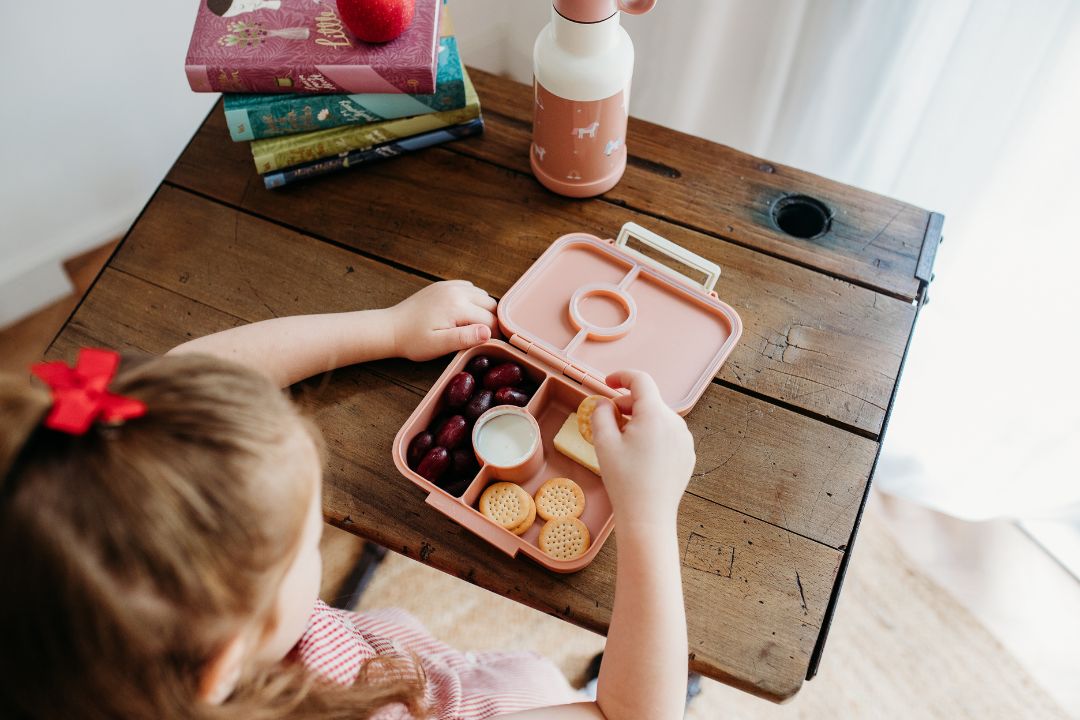
Try presenting meals in separate, layered, or deconstructed ways, such as clear jars, stacked salads, or bento-style compartments. That lets picky eaters sample one section without feeling they must tackle the whole plate. Add tiny edible accents, such as citrus zest, pomegranate seeds, chopped herbs, or toasted seeds, to create pops of colour that attract attention without changing flavour. These small sensory tweaks steer focus to colour and texture, and both research and everyday experience suggest that can make children more willing to try something new. Repeat the same visual strategies across meals to build familiarity, so children can approach unfamiliar items at their own pace.
Plan colorful bento-style lunches in minutes.

Encourage kids to try new foods with playful shapes and sizes
Try cutting new foods into uniform, bite-sized pieces — roughly pea-sized, or about 1 centimetre cubes. Smaller, familiar-looking pieces make chewing easier, lower the perceived risk, and increase the chance of a tentative taste. Place a tiny sample next to a familiar favourite to invite a first nibble without pressure. Altering thickness and surface area also changes mouthfeel: shave courgette into ribbons or slice cucumber paper-thin to reduce chewing, or offer thicker sticks to make the same food feel more substantial.
Try these gentle tricks at snack or lunch time to invite curiosity without pressure. Cut cheese, sandwich fillings, cooked veg, or fruit into stars, rounds, or animal shapes, or arrange pieces into a face or a rainbow to tempt inspection. Offer a mixed-size plate with very small tasters of the new food alongside larger portions of known favourites, putting the new item in the smallest portion to reduce pressure and encourage voluntary tasting. Change how food is presented and handled: try small skewers, cocktail sticks, or mini forks, or serve bite-sized versions of adult dishes. Supervise any use of sharp implements for safety, but remember that swapping how a food is held and eaten often makes it more appealing without changing the ingredient.
Small shape and size changes that prompt tasting
- Cut foods into uniform, bite-sized pieces, roughly pea-sized or about 1 centimetre cubes, to lower perceived risk, make chewing easier, and raise the chance of a tentative nibble; shave courgette into ribbons with a peeler, slice cucumber paper-thin, or offer thicker sticks to make the same food feel more substantial, and use a melon baller for berries and small fruit.
- Use familiar shapes and playful arrangements to spark recognition and curiosity, cut cheese and sandwich filling, shape cooked vegetables and fruit as recognisable forms such as stars, circles, and animal silhouettes, arrange items to suggest a face or a rainbow, and pair a tiny sample of the new food with a larger portion of a known favourite so the novel item sits in the smallest size and feels low pressure.
- Switch utensils and formats to change perception and handling, serving items on small skewers, cocktail sticks, mini forks, or in little cups, or offer bite-sized versions of adult dishes; supervision increases safety, and blunt alternatives such as short skewers or silicone picks work well for younger children.
- Save time and manage risk with quick prep and clear safety habits: batch-slice samples, keep a selection of cutters and peelers to make shapes fast, present a mixed-size plate so the child can choose, and always match portion size and shape to the child’s chewing ability while watching during first tastes.

How to adjust food textures to help your child build tolerance gradually
Change texture in small steps. Start by pureeing or finely grating a new vegetable into a familiar dish, then over several meals increase the particle size to mashed, soft chunks, and finally intact pieces. Let your child’s responses guide when to move on. Present the same food with only one variation at a time, for example steamed courgette purée, mashed courgette, soft slices, then raw ribbons, so your child can learn the new mouthfeel without facing several unfamiliar sensations at once. Keep a simple note of observable signs, such as number of mouthfuls, willingness to touch, first lick, and first bite, and use those to set the next micro-goal.
Try small texture tweaks rather than a completely new food. Add a crunchy element, such as toasted seeds or crispy breadcrumbs over cooked veg, or a thin yoghurt or dip to give a smooth coating. Roasting brings natural crispness and sweetness, and letting your child add the topping gives them control and often reduces resistance. You can also change temperature and moisture: serve warm for a softer mouthfeel or cool to increase firmness, and add a little extra sauce or stock to smooth grittiness. Use short, gentle tasting rituals to build tolerance — encourage touching, smelling, and licking before biting, involve your child in preparation, and model eating the food yourself. These single-variable changes and small rituals often shift acceptance more than offering an entirely new dish.
Keep small meals warm or cool while testing textures

How to pack lunchboxes that encourage gentle food exploration
Try packing a mini tasting box in your child’s lunchbox: one familiar item, one gentle variation, and one completely new food. Cut everything into bite-size pieces and keep portions separate to avoid overwhelm. Research shows smaller, low-pressure portions make children more willing to sample new foods. Introduce novelty by changing sensory cues in small steps rather than replacing the food entirely: swap mashed potato for lightly mashed sweet potato, offer steamed courgette as thin ribbons, or add a little citrus zest to a salad. Use neutral, sensory-led labels like crunchy, creamy, tangy, or soft to take the pressure off and help children focus on the experience.
Try a small, separate pot of a favourite dip alongside an unfamiliar vegetable or grain. The known flavour gives your child a predictable anchor, so they can explore the new taste without feeling pressured. Vary the presentation: change where the new item sits in the lunchbox, cut it into different shapes, arrange contrasting colours, or skewer small bites. Repeated, low-stakes exposure in different formats builds familiarity over time and makes it more likely your child will accept the food on a later occasion.
Small, controlled sensory changes, paired with child-led, repeated exposure, can help picky eaters move from avoidance to tentative acceptance. Change one thing at a time, such as colour, contrast, shape, size, or texture, to reduce perceived risk and invite curiosity. For example, cut courgette into coins or stars, serve a new food on a contrasting plate, or offer a familiar dip alongside it.
Try these practical approaches, such as sensory play, visual contrast, playful shapes, gradual texture steps, and lunchbox micro tasters, to design tiny, testable changes tailored to your child. Track small, observable steps, such as touching, licking, and first bites; note which actions help, and repeat them. Let your child set the pace, and over time these small experiments can turn tentative nibbles into regular choices.