

A lunchbox that comes home half-full can make the end of the school day feel more frustrating than it needs to. But uneaten food is not a parenting failure, and it does not automatically mean your child is fussy. It is useful feedback: perhaps the portion was too generous, the food became soggy, the box was tricky to open, or there simply was not enough time to eat.
Instead of pressing for a clean box, try an observe–adjust–repeat rhythm. Notice what returns, change one small thing, and look again. Over time, this calm little feedback loop can reduce avoidable waste while helping lunches feel satisfying, familiar and manageable.

Observe first: what is the lunchbox telling you?
Start by looking for patterns rather than judging the result. Is the same food returning, or is the whole lunch untouched? Does the child say they disliked it, or do they mention that lunch was rushed? Check whether wet foods have softened dry ones, whether fruit is difficult to bite, and whether your child can open every lid, pot and wrapper independently.
It can help to ask one neutral question, such as “What made this one hard to eat today?” Keep the conversation brief and curious. You are gathering clues, not asking your child to defend their appetite. A changing appetite is normal, and one unfinished lunch rarely tells you very much on its own.


Adjust one thing at a time
Once you have a clue, make the smallest practical change. If one food is regularly returned, try offering less of it in a separate section before deciding it is disliked. A smaller, clearly defined amount can feel more approachable, and you can add a little more on days when your child asks for it or regularly finishes it.
If the same food returns untouched even when the portion is modest, preference may be the stronger clue. Try a different shape, temperature or familiar pairing, or leave it out for a while without making it a big issue. If several foods are left on busy days, check the timetable and the opening routine before changing every portion. The problem may be time or access rather than appetite.

Repeat: use a simple one-week lunchbox review
For about a week, make a tiny note after school: what came back, roughly how much, and any reason your child volunteered. You do not need to record every bite or show the notes to your child. The purpose is to spot a pattern across ordinary days, not to monitor or police eating.
Use the notes to test one idea. For example, reduce the amount of a frequently returned item, move a dip into a separate pot, slice a difficult-to-eat fruit, or simplify the number of sections. Then keep the rest of the lunch familiar for a few days so you can tell whether the change helped. If the pattern continues, change the next likely barrier rather than making the lunch bigger, busier or more complicated.
A practical end-of-week check-in
- Observe: look back at the notes and identify the most consistent clue, such as too much food, a disliked item, a texture change, limited time or difficulty opening the box.
- Adjust: choose one small change to keep testing, such as a smaller portion, a different shape, a simpler compartment or a separate sauce pot.
- Repeat: after a few more ordinary lunches, keep the change if it helps, refine it if needed or return to a familiar option without making it a battle.

Make portions smaller, clearer and easier to eat
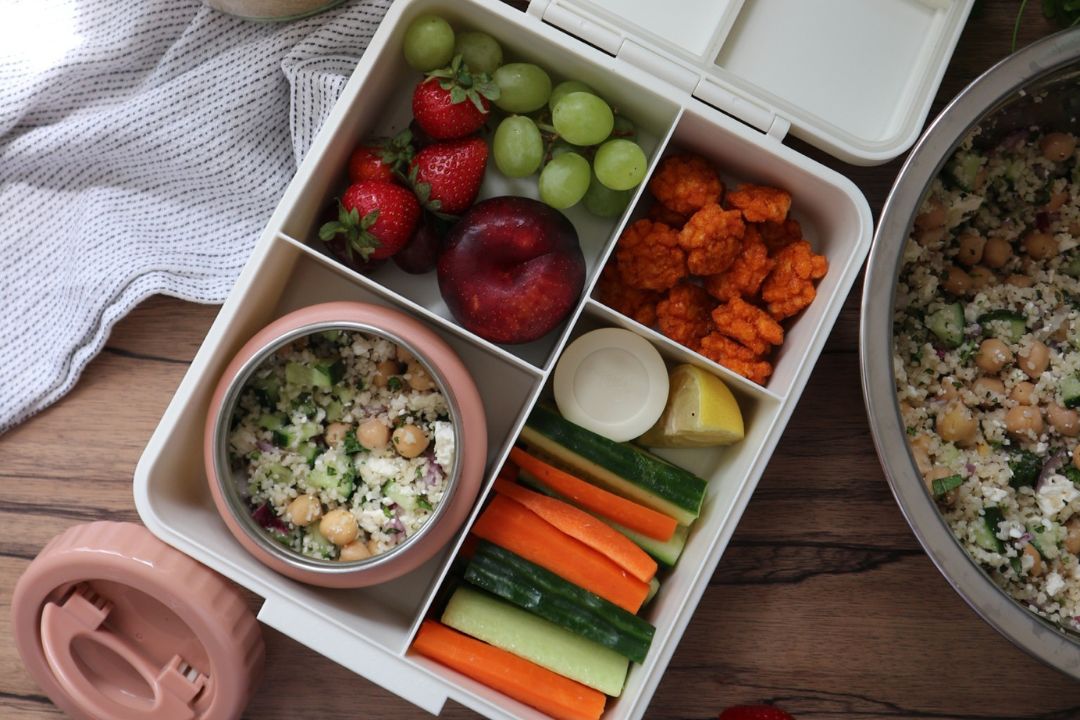
Think of portion guidance as a flexible starting point, not a target your child must finish. A useful visual approach is to begin with modest, familiar amounts and watch what happens: a few pieces rather than a whole handful, a small sandwich portion rather than several slices, or a little fruit with room for more if needed. What works will vary with appetite, the day’s activity and how long the lunch break is.
Compartments and small reusable pots can make these choices visible and manageable. Use them when separation helps, for example, keeping crackers away from cucumber, or putting hummus, yoghurt or dressing somewhere your child can add it themselves. But four or five tiny sections are not automatically better. If they create extra packing work or make the lunch feel like a collection of tasks, simplify it. A main section plus one or two smaller portions may be plenty.


Involve your child and reuse suitable leftovers
Offer low-pressure choices before packing: “Would you like apple slices or pear?” or “Do you want the dip today?” You can invite your child to help choose what goes in each section, without asking them to promise to eat everything. The Citron Lunchbox Planner may be a useful optional prompt for planning together; it is not a requirement for a successful lunch routine.
Once food comes home, pause before deciding what happens next. Follow your usual household and school food-safety guidance, then reuse suitable leftovers where appropriate. They might become a next-day sandwich or wrap filling, a topping for a family meal, a dip, a yoghurt mix-in or an ingredient in a shared dish. This keeps waste in view without making your child responsible for finishing or rescuing every leftover. For more portion and packing ideas, see Citron’s guide to portioning a child’s lunchbox.
Keep the next lunch simple: use what you have learned, make one manageable change and give it time. The right adjustment may be different from one week to the next, and your child does not need to finish everything for the routine to be working.