

There is nothing more disappointing than a hot packed lunch turning up cold and soggy, whether you’re sending it to school, taking it to work or packing for a day out. Keeping food at a safe, appetising temperature until it’s eaten just takes a bit of planning, the right containers and some careful handling.
This friendly guide walks through five simple, practical steps to keep family meals hot on the go. It covers how to choose the right thermal containers and insulating layers, prepare and pack food so it retains heat, pre-warm containers and layer insulation, seal pots to prevent leaks, and transport, store and reheat food safely. Follow these tips to cut food waste and make packed lunches, back to school meals and day-trip food more enjoyable.

1. Choose insulated containers and layers to keep kids' lunches warm
Vacuum-insulated, double-walled containers keep food much warmer than single-walled boxes. The vacuum between the walls cuts down heat transfer from conduction and convection, so they are especially handy for soups and stews. A useful trick is to preheat the container by filling it with hot water for a few minutes, tipping the water out and then adding the food to reduce initial heat loss. Fill the container as fully as you can and portion meals into compact servings to minimise trapped air, which cools faster than the food. Finally, check that lids sit snugly to limit internal air currents that can carry heat away.
Wrap your lunch container in an insulating layer, for example an insulated sleeve, a snug fabric-lined lunch bag or a tightly wrapped tea towel, and tuck in a reusable heat pack or small hot-water bottle as a second heat source. Think about material and shape: ceramics and double-walled stainless steel keep heat best, thin plastics cool quickly, and compact, taller containers expose less surface area so contents stay warmer. These simple steps help keep a hot packed lunch warm for longer without any fiddly preparation.
Keep meals hotter longer with an insulated lunch bag.

2. How to prepare and pack lunches to keep food warm
To help a hot meal stay hot for longer, pre-warm a metal or vacuum-insulated pot by pouring in very hot water, leaving it for a short while, then emptying it and filling it with the hot food. A warmed, well-sealed container slows the initial loss of heat. Choose dense dishes such as stews, casseroles or roasted root veg, as compact masses retain heat better than thin or finely chopped pieces. Fill pots as full as possible, or if there is space, nestle the container in a folded tea towel and wrap with a layer of foil and cloth to reduce heat escaping from trapped air.
Try these simple tricks to keep packed lunches warm and tasting their best: - Carry hot gravies, soups or sauces in a sealed flask or small pot and add them at mealtimes to rehydrate drier items. The warm liquid also helps keep nearby food hot. - Pack larger chunks rather than finely slicing, and place the hottest item in the centre of the box. Close lids straight away so steam stays trapped and continues to warm neighbouring pieces. - Minimise air gaps by filling spaces or packing snugly inside the lunchbag. Slowing airflow reduces temperature differences between items. Together, these small steps cut heat loss and help a packed lunch retain both temperature and texture until it is eaten.
Keep lunches warmer longer with an insulated, food-safe bag.

3. Pre-warm your containers and add insulation layers to keep food warm
Try this simple trick to keep hot lunches warmer for longer. Pour hot water into a container or vacuum flask to warm the walls, tip it out, then pack the hot food straight away, as pre-warming means less of the food's heat is lost warming the vessel. Wrap the container in cling film or foil, add a fabric tea towel or a neoprene sleeve, and place the bundle inside an insulated lunch bag or box to slow heat loss. Place reusable hot packs against the sides and lid, using several small packs rather than one large one to spread warmth evenly, and fill containers so there is as little air inside as possible to slow cooling.
Put soups into a vacuum flask and solids into an insulated box wrapped in a few layers. Place hot items in the centre of the bag so insulation surrounds them. Check seals and keep the bag closed until you are ready to eat to preserve retained heat. Small tweaks, such as tucking small packs around the flask lid and packing denser items next to the hot dish to add thermal mass, help the whole setup hold temperature for longer.
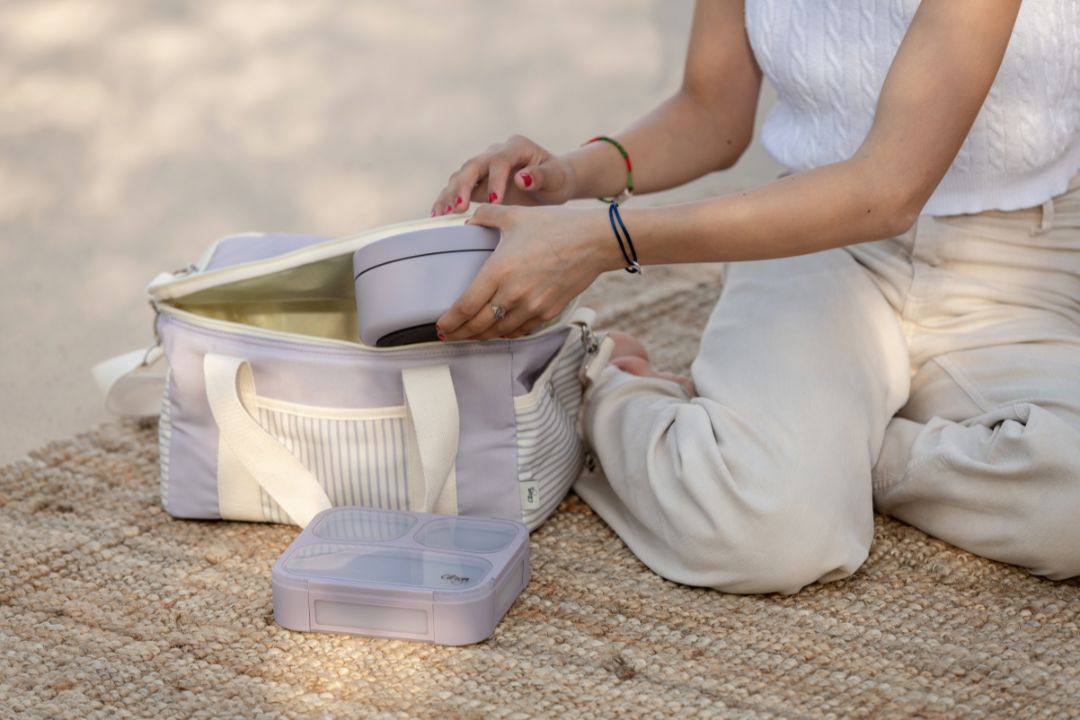
Keep hot lunches warmer with an insulated, easy-carry bag
4. Seal your containers securely to avoid lunchtime leaks
Choose containers with a reliable seal for hot food: screw-top jars with silicone gaskets, clip-lock tubs with an inner rim or vacuum-seal lids all help trap steam, keep heat in and prevent spills. Check gaskets for cuts or warping, wipe the sealing surfaces clean, and test closures by filling the container with water, closing it, turning it upside down and giving it a gentle shake to reveal any weak points. When you are packing very hot soups or drinks, use containers rated for hot fillings or leave a small vent so steam can escape, because trapped vapour can build pressure and force lids open.
Try these simple tips to help keep a hot lunch warm until mealtime. Pop sealed containers inside a resealable bag, a reusable pouch, or wrap them in a tea towel to catch any leaks and add an extra layer of insulation. This limits air exchange around the lid, so food retains heat for longer and any spill is contained. Make sure lids and seals are dry and sitting properly, replace worn seals, and pack containers upright, nestled between other items so they do not get knocked about. A well-maintained seal combined with stable packing reduces the chance of leaks and the rapid cooling that follows exposed surfaces, helping a hot lunch stay warm until it is eaten.
Keep lunches warm and leak-free for hours.

5. How to transport, store and reheat meals safely
A few simple steps will help keep hot food hot when you are on the go. Preheat your vacuum-insulated pots with very hot water, empty them and then fill with piping hot food. Wipe the rims before sealing to make sure the lid sits properly, and put the sealed pots inside an insulated bag, since vacuum insulation slows heat transfer and reduces condensation. Keep containers upright during the journey, secure the lids and cushion them to reduce movement and spills. Surrounding the hot container with retained heat sources such as hot packs or extra insulation will also help limit heat loss from convection. Use a probe thermometer to check the internal temperature before you set off and once more on arrival. Aim to keep food at or above 63°C and check for cold spots. If any part has dropped below that temperature, reheat until it is piping hot all the way through.
If you cannot keep cooked food safely hot, cool it quickly by dividing it into shallow containers, move them to chilled storage, and clearly label what is inside. Cooling first reduces bacterial growth compared with leaving food at moderate temperatures. When reheating, pick a method that warms food evenly, stir partway to remove cold spots and cover to keep moisture so the centre reaches steaming hot throughout. Check the centre with a probe thermometer, reheat only once, and throw away any food that smells or seems off.
A hot packed lunch stays enjoyable when you use a heat-retaining container, pack dense, compact portions and add layers of insulation to minimise heat loss from conduction, convection and radiation. Pre-warm the container, secure the lid properly, and tuck in a reusable hot pack or a snug insulating sleeve to keep soups, stews and roasted veg cosier for longer by helping the food retain heat and reducing air gaps.
Try these five simple steps to keep lunches warm and tasty: choose a good thermal container, prepare and pack foods so they hold heat, pre-warm flasks or add an extra layer of insulation, seal containers tightly to stop leaks, and transport and reheat food safely. Each step helps reduce heat loss and the chance of a cold, soggy meal. A little preparation, a well-sealed container and sensible reheating mean fewer ruined lunches, less food waste and a warmer meal when it matters.